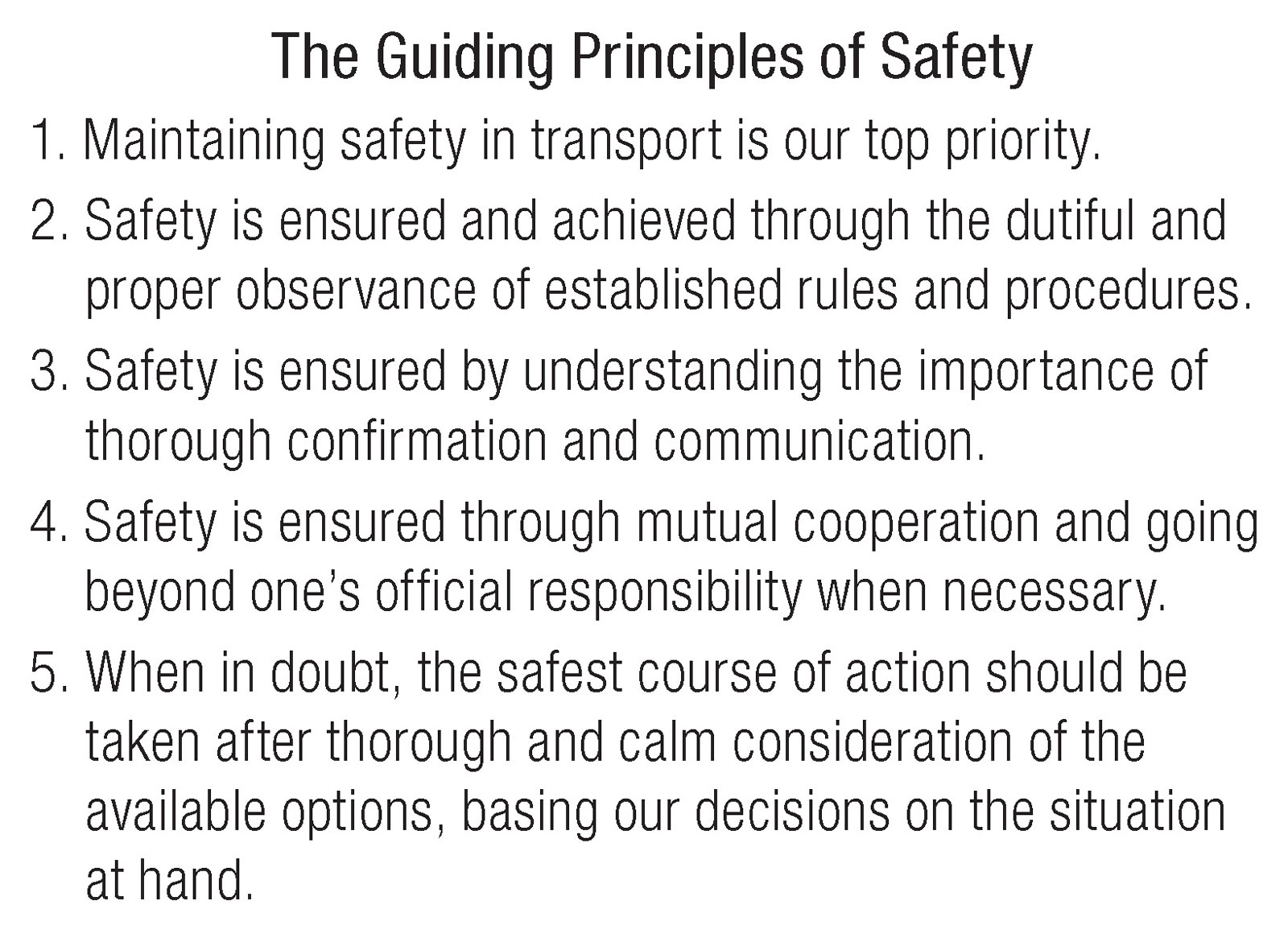
JR East has prescribed The Guiding Principles of Safety in the Code
of Conduct for its safety-related employees.
Group Safety Plan 2028
Since its founding, JR East
has implemented a series
of five-year safety plans. In
FY2024.3, we formulated
our new Group Safety Plan
2028, which is our eighth
safety plan. With the environment
surrounding the Group
changing dramatically,
we need to respond
appropriately to these
changes. The Group Safety
Plan 2028 is based on the theme of
“Taking the nature of railway work to
heart, imagine the unexpected, reach
for safety!” It identifies four key areas,
and we will proceed with specific
initiatives accordingly.
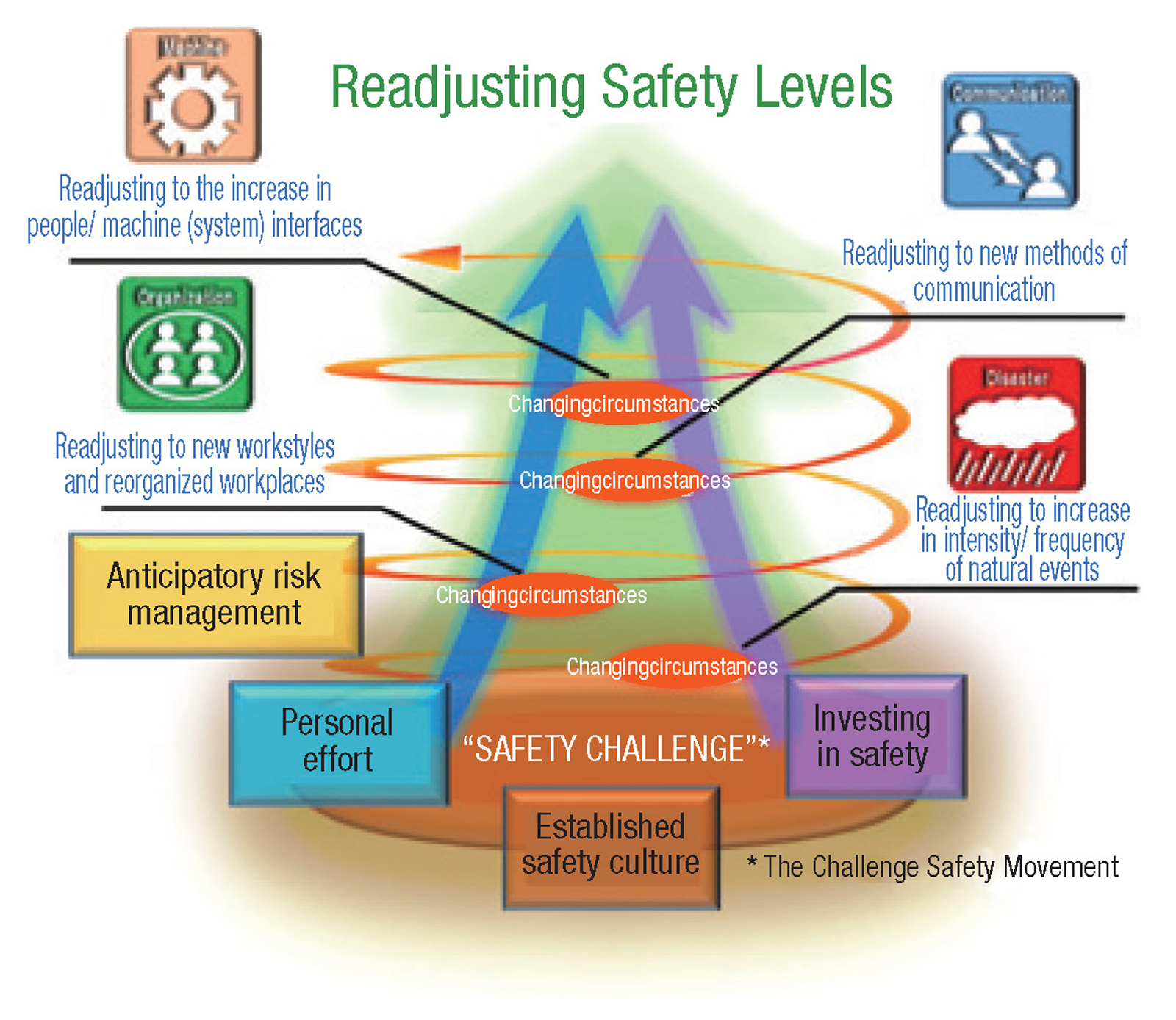
Potential risks brought about by changes in workstyle and organization, systems, group administration, and fewer opportunities to learn from actual accidents
External
Potential risks related to greater intensity and frequency of natural events, population decline, advance of Digital Transformation (DX), new lifestyles resulting from Covid-19 pandemic, and diversification of workstyles
Potential for unprecedented accidents or events
Accordingly,
we have highlighted four key areas going through particularly important changes that will be requiring
attention over the coming five years. Understanding and reconsidering our daily tasks while paying
attention to these areas, we can address hazards that were previously unthought of.
Area #1
Human/machine (or digital) interface
We must properly understand the mechanics and structures of machines and how they
operate in order to make informed judgment for malfunctions or irregular situations that can
only be resolved by manpower.
We must try to foresee unanticipated situations based on our understanding of the above,
and carefully consider what is involved when incorporating new systems. Moreover, we must
design peripheral systems in close relation to the entire system, an area which has been often
overlooked in the past.
We will raise up specialists in each department who can identify and address necessary
changes for the progress of the group’s railway systems.
Area #2
New workstyles and organization
We must keep the nature of our job/work in mind when rules and structures are
being overhauled and not take it for granted that things will be as they were before.
Keep one step ahead and foresee potential hazards.
For us to increase the awareness among all employees on the frontlines, we must
plan and implement training sessions where each one learns to think critically and
independently.
It will be vital to set up a system to ensure that safety initiatives are established
and put into practice at the frontlines, wherein those in leadership roles who both
understand the nature of the work can collaborate.
Area #3
Diversified methods of communication
With communications technology advancing at a rapid pace, we are no longer
bound by constrictions of travel and personal interaction. However, as we also
must ensure that crucial details are not overlooked or misunderstood, we need
to be selective in how we use which communication tools and for what situations.
Area #4
Increased intensity and frequency of natural events
We will increase use of meteorological data from outside sources,
digitalization, establish new systems, and promote investment in
disaster prevention training.
JR East Group Goal
NO accidents involving injury or fatality, regardless of
customer, employee, or any other person
*
*Includes JR East Group and partner companies
Foreseeing the Unexpected
Significant changes in the operating environment, both internal and external, have increased the likelihood of “heretofore unforeseeable accidents
or events.” We will increase awareness using undertakings focused on the actual nature of the work at hand, remembering what has been useful
in similar circumstances, and we will address hazards that were previously unthought of.
Starting with simple awareness and progressing onto imagining what could happen, we will prepare for hazards accordingly and prevent
regrettable outcomes that we could have avoided.
You can pinch out to zoom in.
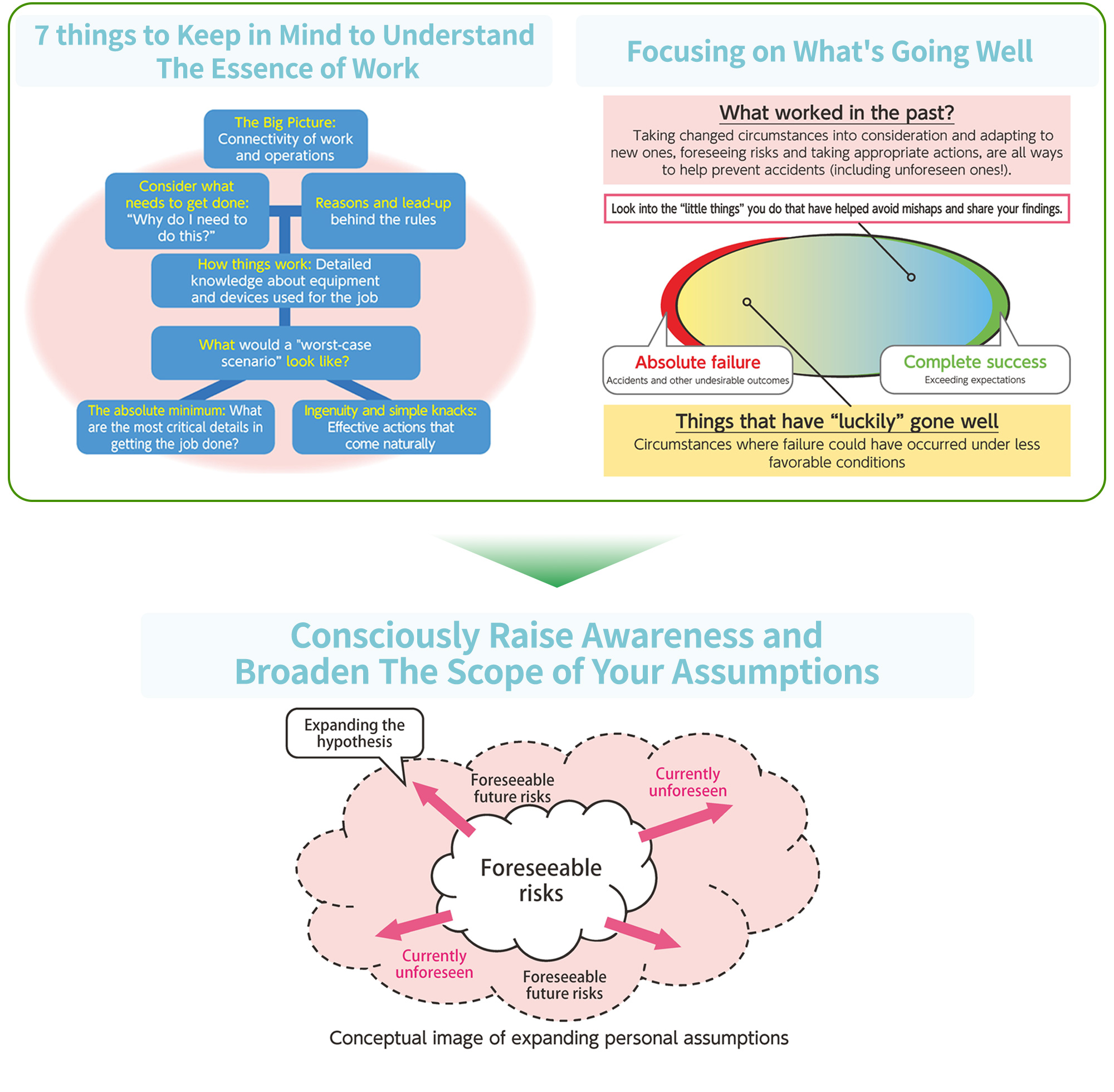
Expanding expectations
We tend to limit our thinking when planning or strategizing and focus on the
"expected", while outside those limits lies the "unexpected". But when we widen the
boundaries of the "expected", that which may have been assumed as unlikely can now
be considered as a possible future hypothesis. The first step begins with increasing your awareness. It is important to consciously
increase awareness and widen your sphere of assumptions.
Increasing awareness
We will also change our perspective to increase our awareness. How to increase awareness
Be extra conscious of unfamiliarity in a situation, especially when it is
1) Something New to you, 2) Something that has changed from before,
or 3) Something you have been away from recently* (*called the 3Hs in
Japanese: Hajimete, Henkō, Hisashiburi)
Learn from the perspectives of others(everyone has different assumptions).
Observe! See how it is done at other workplaces, departments, branches,
companies, industries, etc.
The Legacy of Our Safety Culture
At the foundation of our safety initiatives is a culture of safety that the JR East Group has built up over the years. We will continue to cherish and
nurture this culture of safety into the future.
The Origin of Our Safety Culture with the Challenge Safety Movement
We have been undertaking the Challenge Safety (CS) Movement
since September 1988, emphasizing that each employee must take
responsibility for safety and the initiative to act.
Four rules of CS activities
You can pinch out to zoom in.
CS activities in the workplace
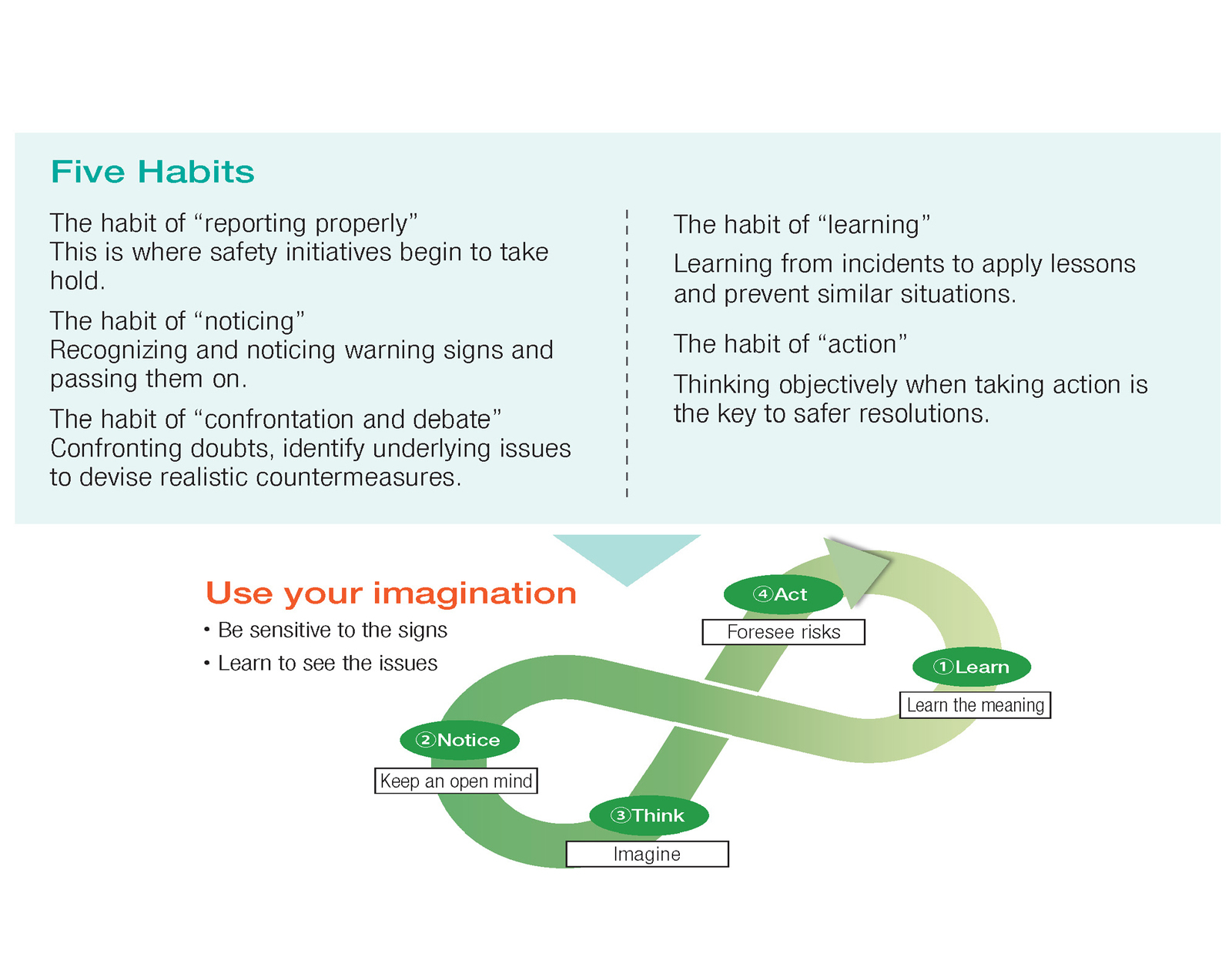
Five Important Habits Resulting from CS Activities
Actions rooted in enforcement of the CS philosophy have resulted in
the establishment of important habits that have reduced the number
of accidents and recurrence of common mistakes. In the Group
Safety Plan 2028, we work on our ability to foresee “the unexpected”
based on these five habits.
You can pinch out to zoom in.
A Tried-and-True Code of Conduct for All Group Companies
Both safety and stability are important for railways. Trying too hard
to keep to schedules sometimes results in not following safety
confirmation procedures properly, which jeopardizes safety. The
entire JR East Group will commit to implementing our firm Code of
Conduct to stop the train when it is unsafe to proceed.
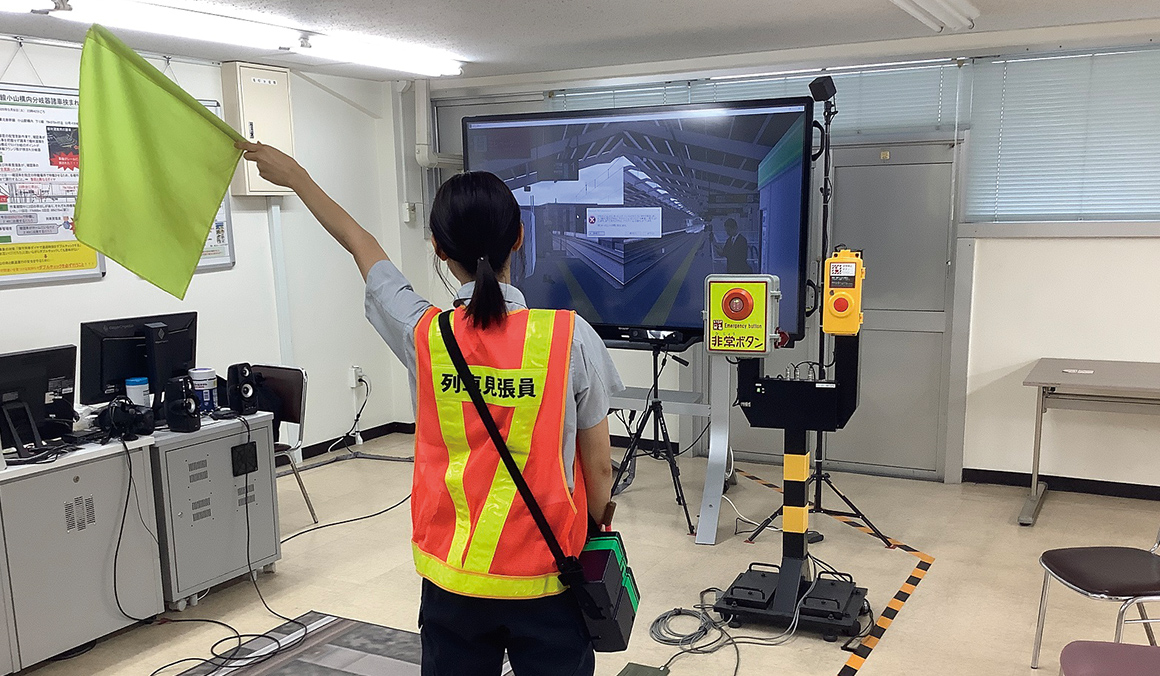
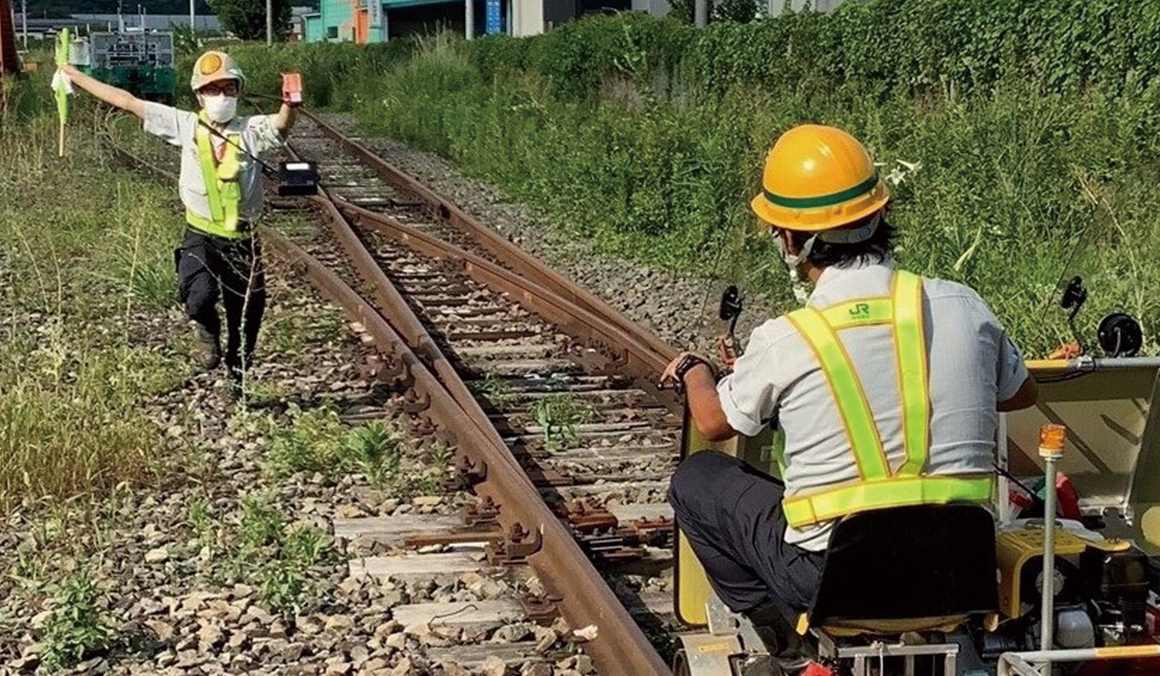
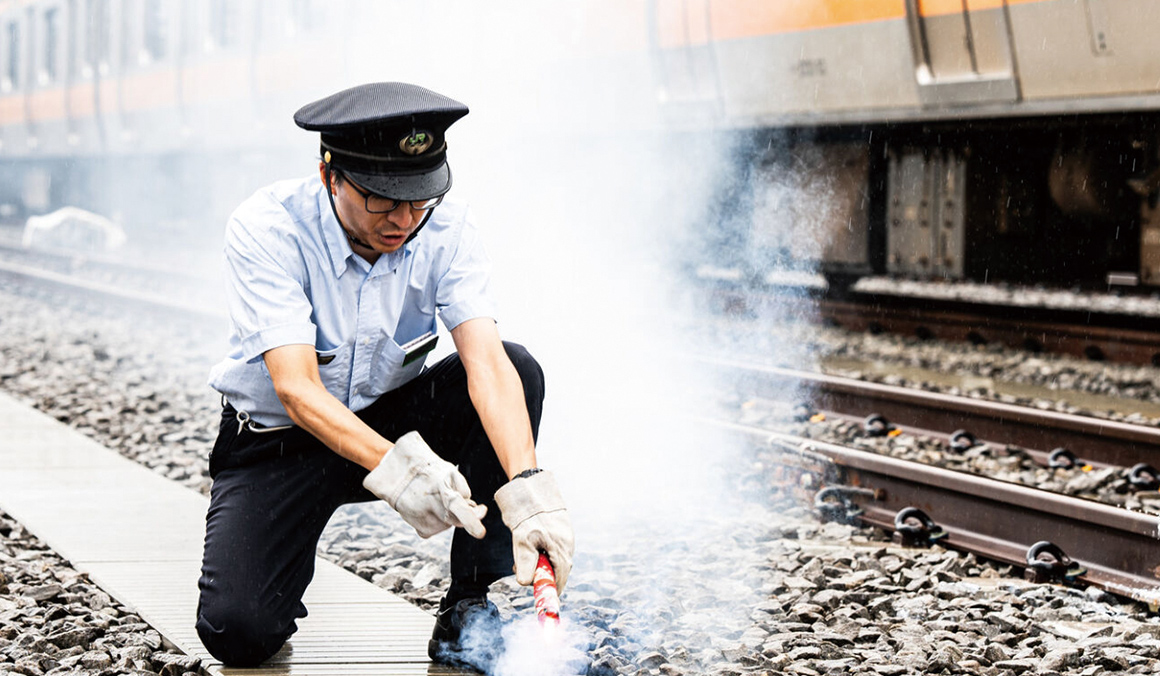
Training on stopping trains
The Three Actualities Principle for Action
Accidents and incidents always occur at the genba. Since they
occur at the genba, the sources of accident prevention can also be
found at the genba. We not only go to the genba but also link our
impressions of it and what we learned there to safety action.
Actual locations
Visiting actual locations to understand
actual conditions
Actual objects
Viewing actual objects (rolling stock,
equipment, machinery, etc.) in order to
understand actual conditions
Actual people
Meeting face-to-face with the people
involved to understand actual situations
Visit to the Mikawashima Accident Memorial
Learning and Applying the Warning Signs
You can pinch out to zoom in.
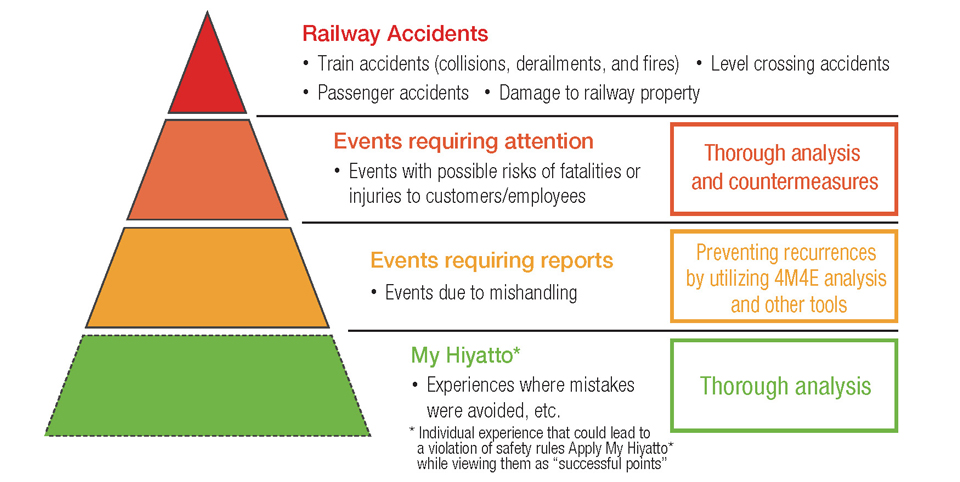
In order to prevent railway accidents and other events from
occurring as well as prevent their recurrence by correctly
understanding accidents and other events, analyzing their causes,
and implementing countermeasures, we have established rules
regarding the
reporting and
classification
of accidents
and other
events, with
the aim
of further
improving
safety.

 You can pinch out to zoom in.