Technology Innovation
Intellectual Property
Intellectual Property Management Structure
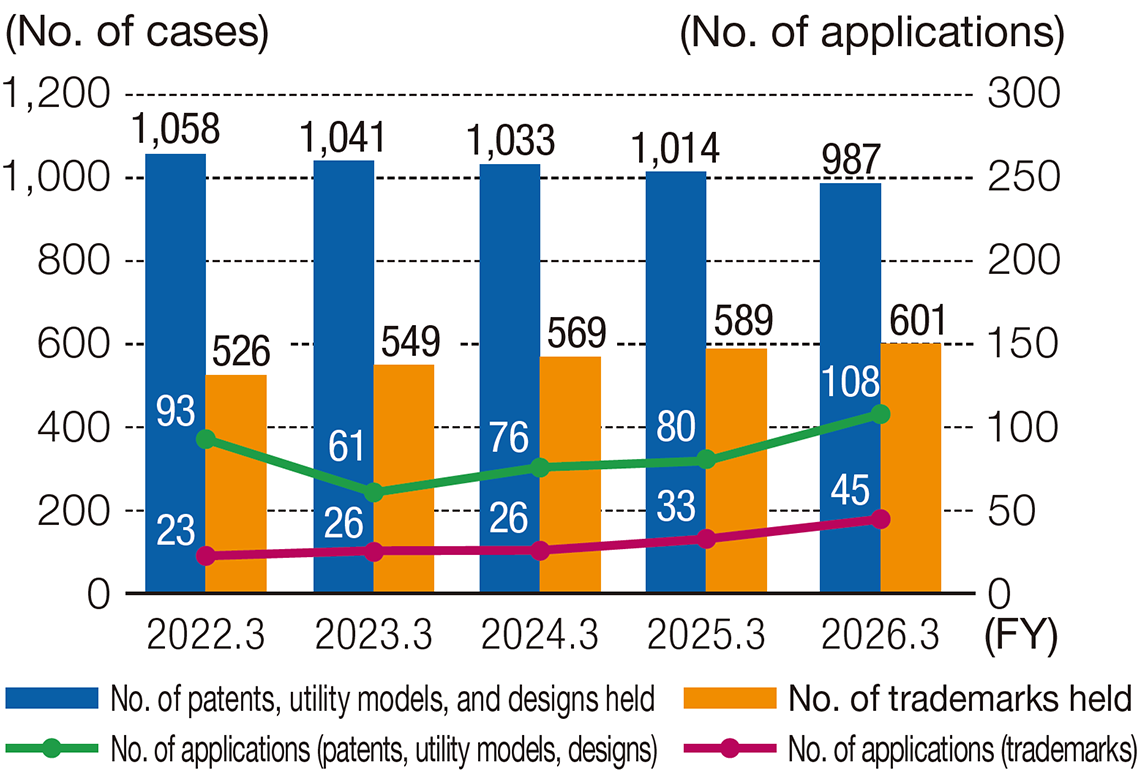
Regarding intellectual properties related to the Company (patents, designs, trademarks, copyrights, and technical information), the Intellectual Property Center is responsible for acquiring, utilizing, and managing intellectual property rights, and also formulating and implementing intellectual property strategies.
Specific Intellectual Property Activities

In businesses related to Mobility and Lifestyle Solutions, the Intellectual Property Center is engaged in activities such as intellectual property education and training, the building of intellectual property portfolios, and the development of personnel with expertise in intellectual property matters. In addition, in April 2026 we launched a website introducing products developed under the “frontline technological development” program, branded these products as GENICHI (Trademark Registration No. 6994474), and began initiatives delivering new value to society.
Developing Diverse Talent with Digital Technology Skills to Promote DX
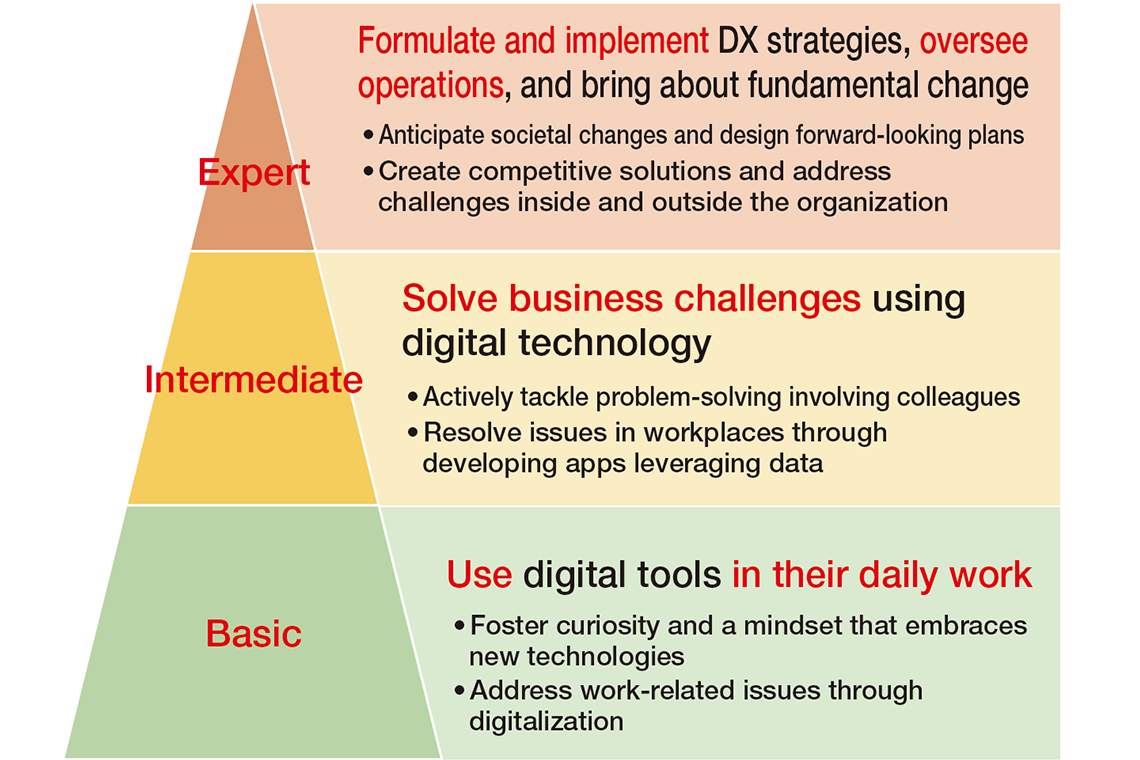
We classify employees with digital technology skills into
three levels—Expert, Intermediate, and Basic—according
to their roles, and we are systematically advancing their
development. Through these human resource development
efforts, we are strengthening the organizational foundation
for realizing “To the Next Stage” 2034. In particular, for
Intermediate human resources, we are accelerating
development primarily through hands-on training
conducted by internal DX promotion specialists.
In addition, we held JRE DX-EXPO 2025 in December
2025 with the aim of sharing DX practices and fostering a
DX culture while strengthening the momentum for DX. On
the day of the event, in addition to presentations on best
practices in DX promotion from various workplaces,
special lectures were given by DX promotion experts from
both inside and outside the company.

Station Digital Transformation
To enhance passenger comfort and convenience, we are steadily moving forward with field trial and pilot implementation of AI and avatar-based customer service at stations. Up until now, we have conducted field trials at JR Ticket Offices at Tachikawa Station and Omiya Station in which AI engages in dialogue with customers to understand their needs and requests and support ticket purchases. Furthermore, we have introduced an AI-equipped, ticket machine assistance on a trial basis at Machida Station that provides basic assistance with purchasing simple tickets such as Shinkansen tickets. We have also installed AI avatars at ticket gates in some stations and are evaluating whether customers can resolve their issues without direct assistance from station staff.


Initiatives to Develop Pioneering Technology

Toward the realization of “Deepening and evolving technological capabilities,” one of the engines of business activities set forth in “To the Next Stage” 2034, we are engaged in the development and implementation of various pioneering technologies, including the realization of a hydrogen society through hydrogen utilization, innovation in customer guidance and facility maintenance through the use of AI and robotics, and facility management using digital twins based on point cloud data. At the same time, we are deepening our exploration of new technology fields, including new energy sources such as fusion energy and the space sector.
Development of Walk-Through Ticket Gates Using UWB Technology
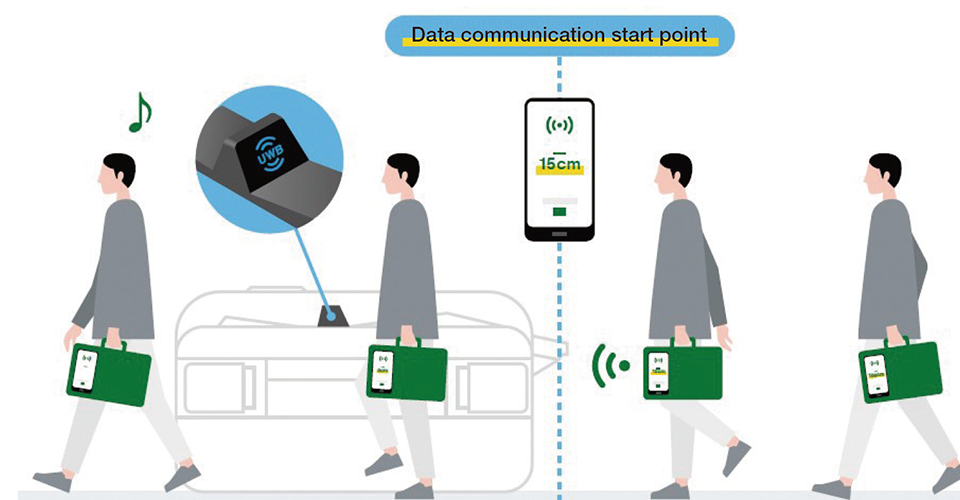
Under Suica Renaissance, we are developing walk-through ticket gates to “go beyond the norm of touching the gate.” Starting in the spring of 2027, we plan to introduce walk-through ticket gates using UWB (Ultra-Wide Band) on a trial basis at stations in the Tokyo metropolitan area, including five stations in the Greater Shinagawa Area. By leveraging UWB’s characteristics such as high-precision distance measurement performance, high-speed data communication with devices, and advanced security, we aim to realize ticket gates that allow passage without holding up a device, simply by carrying a UWB-compatible smartphone.
Introduction of Multifunctional Railway-Based Heavy Machinery
In the electrical division, we are promoting workstyle reform through robots and other technologies and improving the efficiency and productivity of maintenance work, and as a result of technical collaboration with JR West, we introduced multifunctional railway-based heavy machinery in March 2026. For the time being, we will use this machinery for tree-felling work, which places a heavy burden on frontline employees, and in the future, we aim to expand its use across divisions and broaden the scope of applicable tasks.


Initiatives in Driver-Only Operations
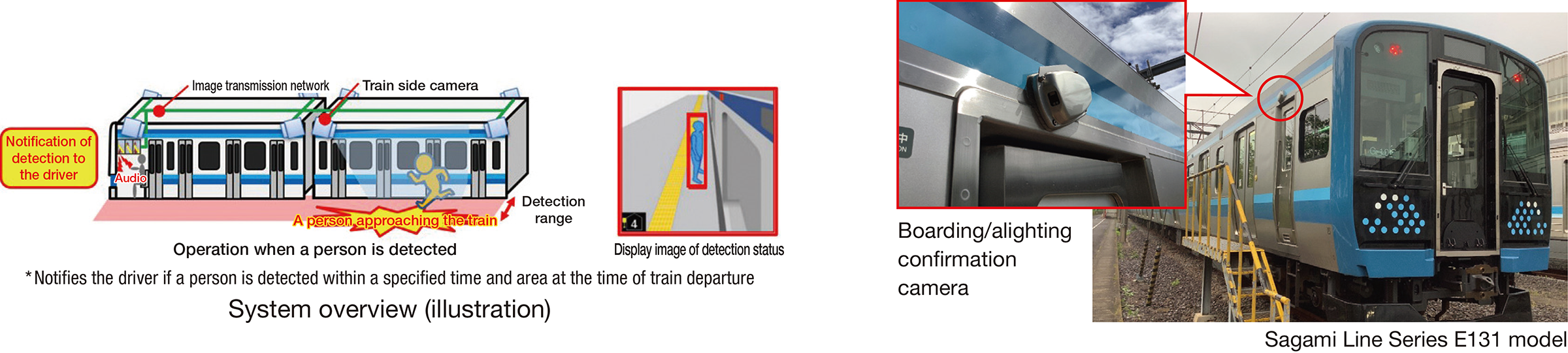
We are expanding driver-only operations while introducing the latest technologies to make railways a sustainable mode of transportation for the future. On lines with 3- to 6-car trains, we use the “onboard platform monitoring system” that displays images from boarding/alighting confirmation cameras installed on the sides of the cars in the driver’s cab. This enables the driver to monitor passenger boarding and alighting, and ensures reliable safety checks during door operation and when the train departs. However, because platform gates are not installed on these lines, we developed a system that analyzes footage from the boarding/alighting confirmation cameras using AI and notifies the driver when a person approaching the train is detected, with the aim of further improving safety during times of high platform congestion. This system has been in use on some trains of the Sagami Line since April 2026, and its rollout to all trains was subsequently completed.
Sharing Railway Technology with Railway Operators
It is expected that the significant decline in the working-age population will make the sustainable operation of the railway business difficult going forward. To address this common challenge among railway operators, we are working on initiatives to speed up technology introduction and reduce costs by utilizing the Railway Technology Information Database, of which many railway operators including JR companies are users, and by leveraging technologies held by other companies.