

Course 2
A retro journey tracing the Meiji and Taisho eras
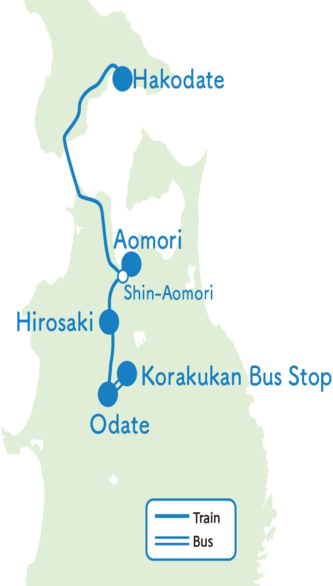
This journey traces the history of Hakodate, Odate, Kosaka, Hirosaki, and Aomori, beginning with the Boshin War era at Goryokaku and ending in 1988 (Showa 63), when the Aomori-Hakodate ferry service was discontinued. Enjoy a trip that allows you to experience the history of Hakodate, Odate, Kosaka, Hirosaki, and Aomori, along with the flow of the Meiji, Taisho, and Showa eras.
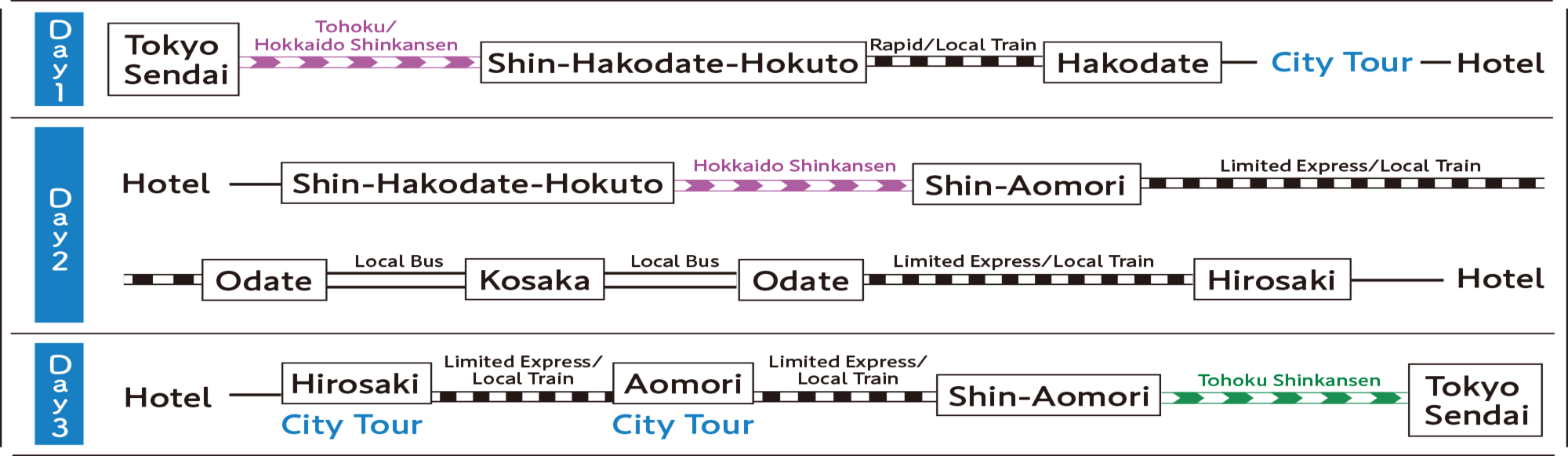
Itinerary/2 nights 3 days
Day 1
Exploring the History of Hakodate

Special Historic SiteGoryokaku Traces
Hakodate City
This star-shaped fortress was the site of the Battle of Hakodate, the final battle of the Boshin War, and is also known as one of the best cherry blossom viewing spots in southern Hokkaido. In winter, the moat is illuminated, and when viewed from the observation deck of the adjacent Goryokaku Tower, you can enjoy a fantastic view of the fortress appearing to float in a star shape.

Hakodate City Jomon Culture Exchange Center
Hakodate City
You can see the national treasure "Hollow Clay Figurine." Nearby are the Kakinoshima and Ofune archaeological sites, which are registered as World Cultural Heritage sites.
Second Day
A tour of historical buildings in the northern area of Akita Prefecture

Sakura Yagura Hall
Odate City
Built in 1933 (Showa 8) by Bunzo Sakuraba, who served as the mayor of Odate town, this is a valuable wooden building from the early Showa period that miraculously survived in the old town of Odate, which was frequently struck by large fires. The building is a Japanese-style house with two wooden floors and a Western-style room, and the observation deck, which has glass windows on all four sides, has the distinctive feature of appearing to jut out from the roof of the second floor, giving it a complex and varied exterior.

Kangakukan
Kosaka Town
Built in 1910 (Meiji 43), this building is a nationally designated Important Cultural Property. While its exterior is Western-style, the interior is a purely Japanese-style theater. Regular performances are held here from late April to early November, and visitors can also view the traditional stage equipment.

Kosaka Mine Office
Kosaka Town
Built in 1905 (Meiji 38), this building is a nationally designated Important Cultural Property. It still displays materials related to the prosperity of the Kosaka Mine, serving as a living industrial heritage site. Visitors can also enjoy commemorative photos taken in rented dresses (for a fee).
Third Day
Experience the culture of Hirosaki and the history of Aomori.

Tsugaru-han Neputa Village
Hirosaki City
The museum displays life-sized Hirosaki Neputa floats year-round, offers daily live Tsugaru shamisen performances, and provides opportunities to experience Tsugaru culture through activities such as demonstrations of traditional crafts. The "Yokien" Japanese garden, designed in the Oishi Bugaku style and designated a nationally registered monument, is also a must-see.

Apple pie
Hirosaki City
In Hirosaki, known as the "Apple City," you can enjoy a variety of unique apple pies at over 40 shops throughout the city.

Kogin embroidery
Hirosaki City
Sashiko embroidery is a traditional craft from the Tsugaru region. It has a simple charm that somehow evokes a Scandinavian feel. Please find your favorite colors and patterns.
Recommended for getting around Hirosaki City
■ Dotemachi Loop Bus (Cash: 150 yen, Transportation IC card: 130 yen)
The bus departs from and arrives at Hirosaki Bus Terminal, passing through the area around Hirosaki Station and Dotemachi.
(April to November) 10:00 AM to 6:00 PM
(December to March) 10:00 AM to 5:00 PM [Services run every 10 minutes]
■ Cycle Net HIROSAKI
The Hirosaki City Tourist Information Center (1st floor of JR Hirosaki Station), the Hirosaki City Downtown Information Center, and the Hirosaki City Tourist Hall will be available for rental from April, while the Tsugaru Clan Neputa Village and Hirosaki City Apple Park will be available from May.
Usage period: Early April to the end of November
*The rental period may be changed depending on the weather.
Regular bicycle: 500 yen per ride/per bicycle
Electric bicycle rental: 1,000 yen per ride/per bicycle (available only at the tourist center and information center)
Cross bike rental: 3,000 yen per session (reservations required, available only at the tourist center)

Seikan Ferry Memorial Ship Hakkoda Maru
Aomori City
The Aomori-Hakodate Ferry, which was discontinued in 1988, now has its first railway ferry museum. The Hakkoda Maru, the last ferry from Aomori, is still moored at its former terminal. Visitors can explore the bridge, engine room, vehicle deck, and "Aomori-Hakodate World," a recreation of the area in Aomori Station in the 1950s.

Nokke Don
Aomori City
You can browse the shops in the market, choose a little bit of your favorite ingredients to put on a bowl of rice, and create your own original "nokke-don" (a rice bowl dish with toppings).

A-FACTORY
Aomori City
This commercial facility has an attached cider brewery that uses 100% apples grown in Aomori Prefecture. Inside, you'll find souvenirs gathered from all over the prefecture. We also recommend dining while enjoying the view of the bay area from the windows.

Aomori Museum of Art
Aomori City
The museum houses numerous works by artists from Aomori Prefecture, including woodblock print artist Shiko Munakata and visual artist Yoshitomo Nara.

Sannai-Maruyama Site (Special Historic Site) (World Cultural Heritage Site)
Aomori City
Many artifacts have been discovered that overturn previous perceptions of the Jomon period, and these artifacts and related materials are displayed in the "Jomon Jiyukan" (Jomon Time Travel Museum), which serves as the entrance to the site.

inquiry
Hakodate City Tourism Promotion Division
TEL:0138-21-3499
Odate City Tourism Division
TEL:0186-43-7072
Kosaka Town Tourism and Industry Division
TEL:0186-29-3908
Hirosaki City Tourist Information Center
TEL: 0172-37-5501
Aomori City Tourism and Exchange Information Center
TEL: 017-723-4670


