Comfortable Cities
Turning Suica into a Lifestyle Device that Enriches People’s Lives
Our Medium- to Long-term Business Growth Strategy, Beyond the Border, calls for the transformation of Suica, the point of contact between customers and the Group, from a device for mobility into a device for lifestyle that enriches people’s lives.
JR East is incorporating advances in communications and cloud technologies to convert its Suica ticket gate system to a central server system, and is considering ways to leverage the benefits of this system to create new Suica experience value. We will realize new Suica services that are difficult to achieve with the current system of embedding ticket information onto an IC chip. An example of such a service includes receiving a return ticket if you spend a certain amount or more at a station building that you can use immediately by tapping your Suica card at the gate.
In FY2029.3, we will release the Suica app (tentative name), which will allow customers to use a variety of services tailored to their lifestyles all in one place.
Deliver Seamless, Stress-Free Mobility
The JR East app provides a variety of information to help customers travel by train without stress, including train times, locations, delays,congestion, and station maps.
In the development of this app, we adopted three methods to provide value that meets customer needs in a timely manner. These three methods are: (1) a method to accumulate small amounts of value without waste; (2) a user-focused design that designs products while understanding customers; and (3) a software development method that ensures quality and quickly provides value to the world.
We will also use the above methods and approaches in developing the Suica app (tentative name), aiming to create services that will be highly commended by customers.
Development Details of the JR East App
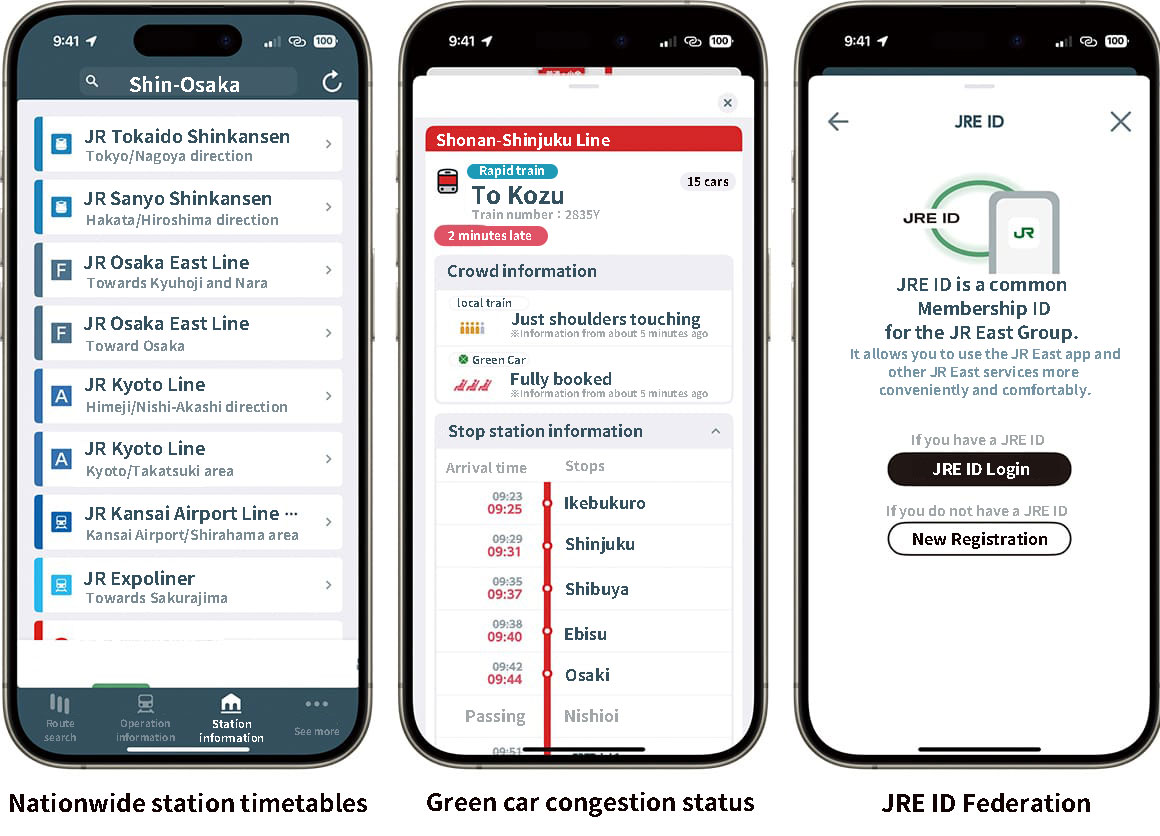
Improving CX for Digital Services (JRE ID)
Each of the Group’s online services has been uniquely developed
with the aim of improving the convenience of real-world services.
However, in order to build broad, long-term relationships with
customers, we need to shorten the gap between services and make
user experiences seamless. As a first step, we began integrating IDs
for online services in February 2025.
Introduction of JRE ID
The name of the integrated ID is “JRE ID.” For services that have introduced JRE ID, customers will need to create a JRE ID when they register, and then they will be able to use the next service without having to create a new ID.
In addition, services that use JRE ID will share customer information and provide new services through
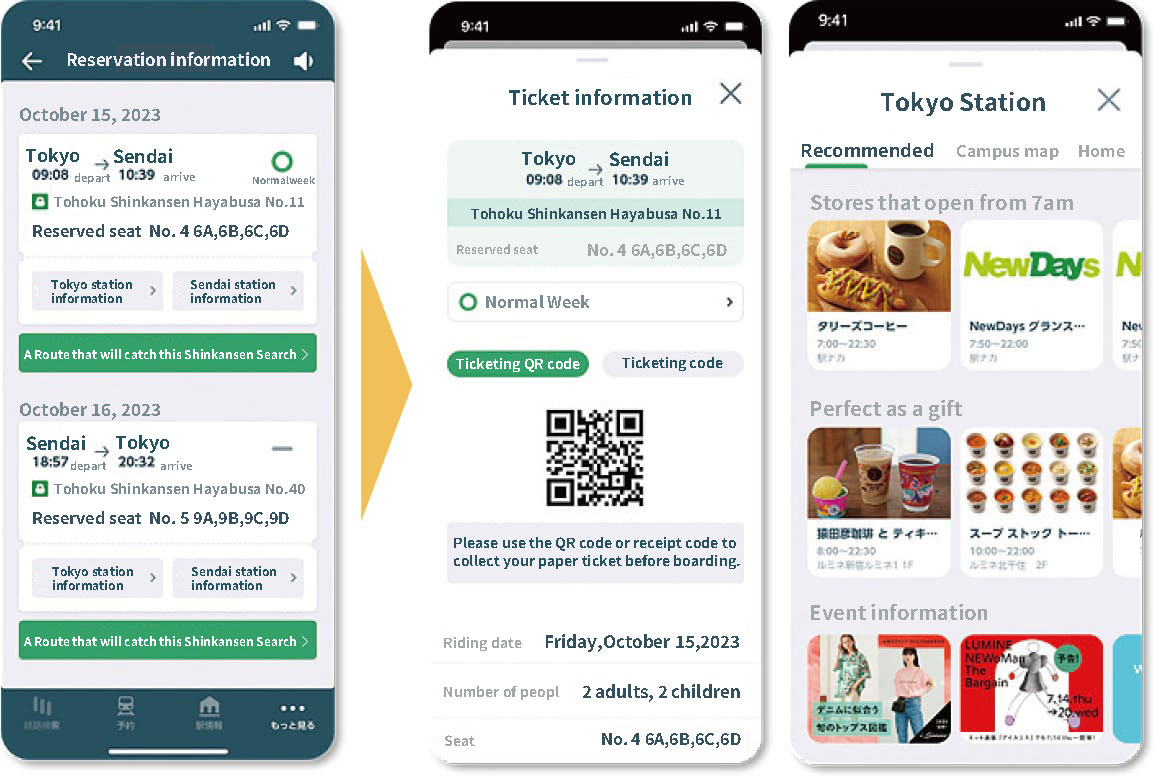
collaboration between the various services. For example, based on reservation information from ekinet,the JR East app will provide transfer instructions and transfer station information tailored to said reservation.
Urban Development That Considers the Environment, Disaster Prevention, and Communities
Under the basic concept of creating diversely appealing towns
with consideration for the environment, disaster prevention, and
communities, we will promote urban development, starting with
the Greater Shinagawa Area, and promote urban development
and establish a revenue base while also contributing to local
communities.
Based on the KPI of “creating connections with local
communities,” we will work to strengthen ties with local
communities through ongoing initiatives such as emergency drills
and local events hosted, sponsored, or performed in cooperation
with the Company or area management organizations.
Furthermore, we will contribute to realizing sustainable cities by
promoting initiatives that contribute to carbon neutrality, resource
recycling, and biodiversity, and through the implementation of
smart cities that utilize data and cutting-edge technology.
Oimachi Special Orchestra
At OIMACHI TRACKS, which opened in March 2026, the “Oimachi Special
Orchestra” program was implemented as a cultural initiative that creates new
connections with the local community, forming a part of our area management
activities. This program is a participatory event in which professional musicians and a
diverse group of participants—including local residents—recruited through an open
call, form a one-day-only orchestra to make music together on the same stage.
Oimachi has not traditionally had a strong image as a “musical town,” but by
intentionally establishing a place for co-creation through music there, the event
became an opportunity for residents, visitors, and artists to naturally mingle, and to
foster a sense of attachment to and pride in the local community. On the day of the
event, the space, including rehearsals, was kept open, allowing even non-performers
to casually drop by, creating
an atmosphere in which the
whole community watched
over the event together
This initiative brought the
Special Orchestra project,
which originated in the
Takeshiba area, to Oimachi,
symbolizing the spread of urban
development that captures the
Greater Shinagawa Area as a
single, unified region. The
application of know-how and
relationships built up across
different areas helped the content of the program to evolve further, making its
engagement with the local community even more multifaceted. Going forward, we will
continue to work on creating a comfortable, vibrant urban space, starting with exchange
through music and culture.


Town Management in TAKANAWA GATEWAY CITY
We established TAKANAWA GATEWAY AREA MANAGEMENT with the aim of promoting town management in Takanawa Gateway City.
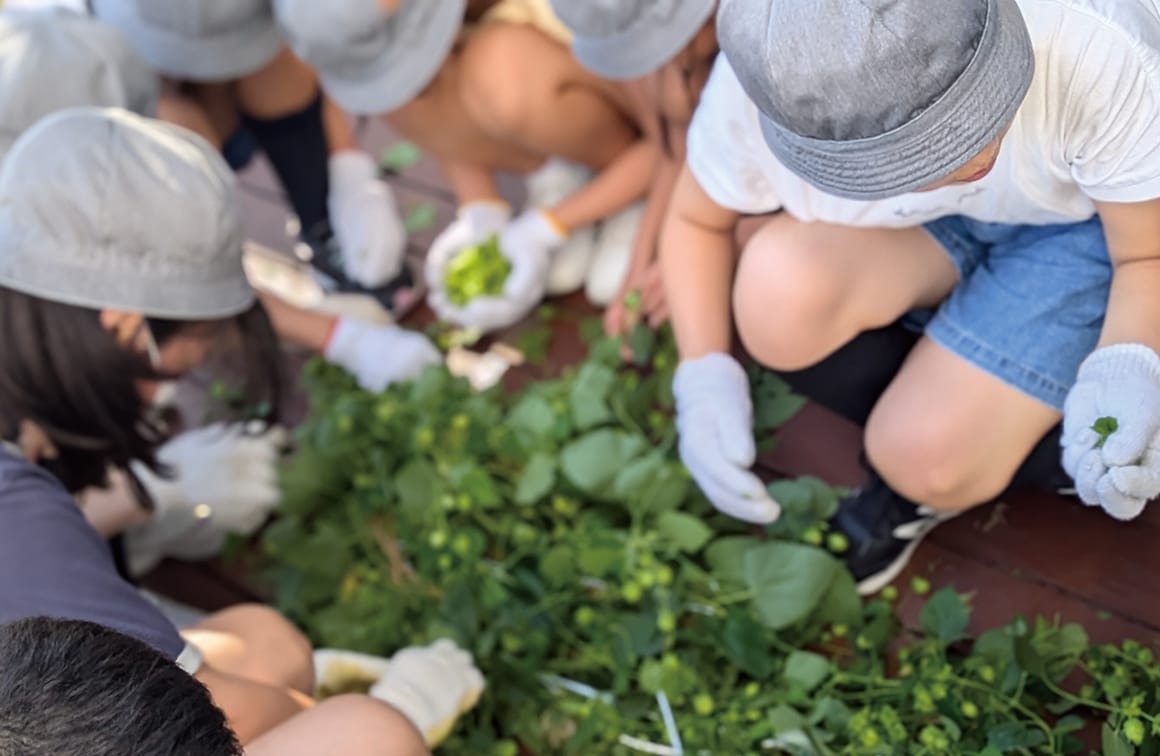
We are working with local communities to grow hops, an ingredient in beer, and through our TAKANAWA HOP WAY community activity, which promotes interaction and collaboration through greenery, as well as initiatives that utilize stations and open spaces, we are working to create a lively town and further enhance its appeal and value.
Community-based Urban Development at TAKANAWA GATEWAY CITY
There are many green spaces within the development area of TAKANAWA GATEWAY CITY. By creating a place where everyone can participate and interact through initiatives to cultivate greenery, we aim to build stronger relationships with local citizens and realize community participation-based urban development that people care about. In FY2022.3, we began a community activity called TAKANAWA HOP WAY to grow hops alongside citizens, businesses, and schools in the development area and surrounding areas.
The community activity initially started with nine locations, but thanks to the hard work of the people in charge and word of mouth from the participants, it has now expanded to 24 locations,with 43 individual participants. We are expanding connections by increasing our cultivation sites not only on the Takanawa side around TAKANAWA GATEWAY CITY, but also on the Konan side across the train tracks.
In addition, the harvested hops are used to brew beer at a brewery in Tokyo about twice a year under the name TAKANAWA HOP WAY, and about 1,000 bottles are sold at events each year.
The beer labels are designed by students who participate in the community, and community members also participate in the brewing process. We also make soft drinks using hops so that people who do not like alcohol and children can partake as well.
Hops are often associated with adults, as they are an ingredient in beer, but this initiative also allows children to participate, such as by making hop-scented soap with elementary and junior high school students and making wreaths using hop vines. Hops were chosen because they can be processed into a variety of things,and through these initiatives, we can form a community that transcends age.
We have had students who participated in TAKANAWA HOP WAY say they would like to continue participating even after graduating, as well as students who participated in the community go on to work for JR East. This initiative helps promising students develop love and care for Takanawa. In the future, I hope this initiative will help develop local leaders in the town.

Promoting Co-Creation-Based Urban Development Centered on the UENO CULTURE & CREATIVITY HUB

We are promoting the Beyond Stations concept, which aims to take stations beyond their role as
“transportation hubs,” and transforming them into “platforms for daily life” where people connect. A symbolic
example of this initiative is co-creation-based urban development, starting from Ueno Station.
Ueno Station is a gateway to a town where visitors can experience some of Japan’s finest history and culture,
with its historic streetscapes and diverse cultural facilities. It has also long played an important role as the
northern gateway connecting Tokyo with local regions. Harnessing this characteristic, we have positioned
Ueno Station as the UENO CULTURE & CREATIVITY HUB, expanding the station’s function as a hub that
“connects” and creating new value by using culture to connect people with towns and local communities.
Specifically, by reorganizing the station space as a venue for cultural experiences and developing events and
exhibitions linked to art and creative activities, we create opportunities for visitors to more deeply experience
the cultural richness and appeal of the town of Ueno. We are also forming a walkable cultural corridor
network featuring art, history, downtown charm, and traditional performing arts, making use of the “Suica”
function as it evolves into a device that supports daily life. By fostering a cycle of “creating cultural
experiences and promoting their appeal” and “town exploration” that starts from the station, we aim to
achieve a society where seamless movement and cultural experiences are integrated across the station and
the town. Furthermore, we will use the station as a “gateway to the north,” communicating the appeal of the
Tohoku, Joshinetsu, and other regions to generate tourist flows and expand the visiting population.
Going forward, we will continue to make full use of stations as a unique asset, and work alongside towns and
local communities to promote co-creation-based urban development centered on stations.