Measures Against Tsunamis
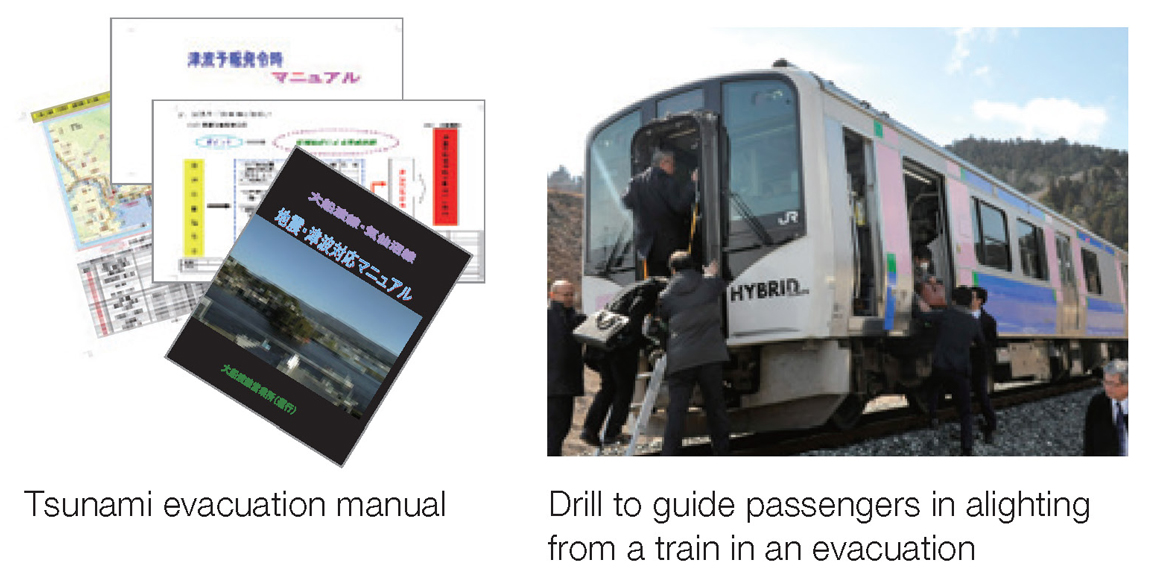
Before the Great East Japan Earthquake, we had set operational restriction methods and tsunami danger zones for each location, prepared manuals, and were holding study sessions and conducting drills on guiding passengers to alight from trains for evacuation. We believe that these efforts led to the prompt evacuation of passengers away from tsunami danger zones at the time of the earthquake.
Formulating Action Guidelines for Evacuation to Avoid Tsunamis
In January 2012, JR East formulated action guidelines for each of its employees to follow while evacuating when there is limited time to act before the arrival of a tsunami.
Action Guidelines for Evacuation to Avoid Tsunamis
At the time of a large earthquake, be prepared for tsunamis. Gather information by yourselves and if communication lines are disconnected, make your own decisions for evacuation. (Do not hesitate because you are worried about evacuating and then later realizing that a tsunami has not in fact occurred.)
Having decided to evacuate, judge the conditions of passengers, and promptly guide passengers to evacuate.
In alighting from trains, evacuating, and gathering information, ask passengers and local people to cooperate.
Even after evacuation, keep moving toward higher places without assuming that you are high enough to be safe.
Stay evacuated with customers and do not return to field offices or trains while tsunami warnings are still being issued.
Tsunami Evacuation Navigation System
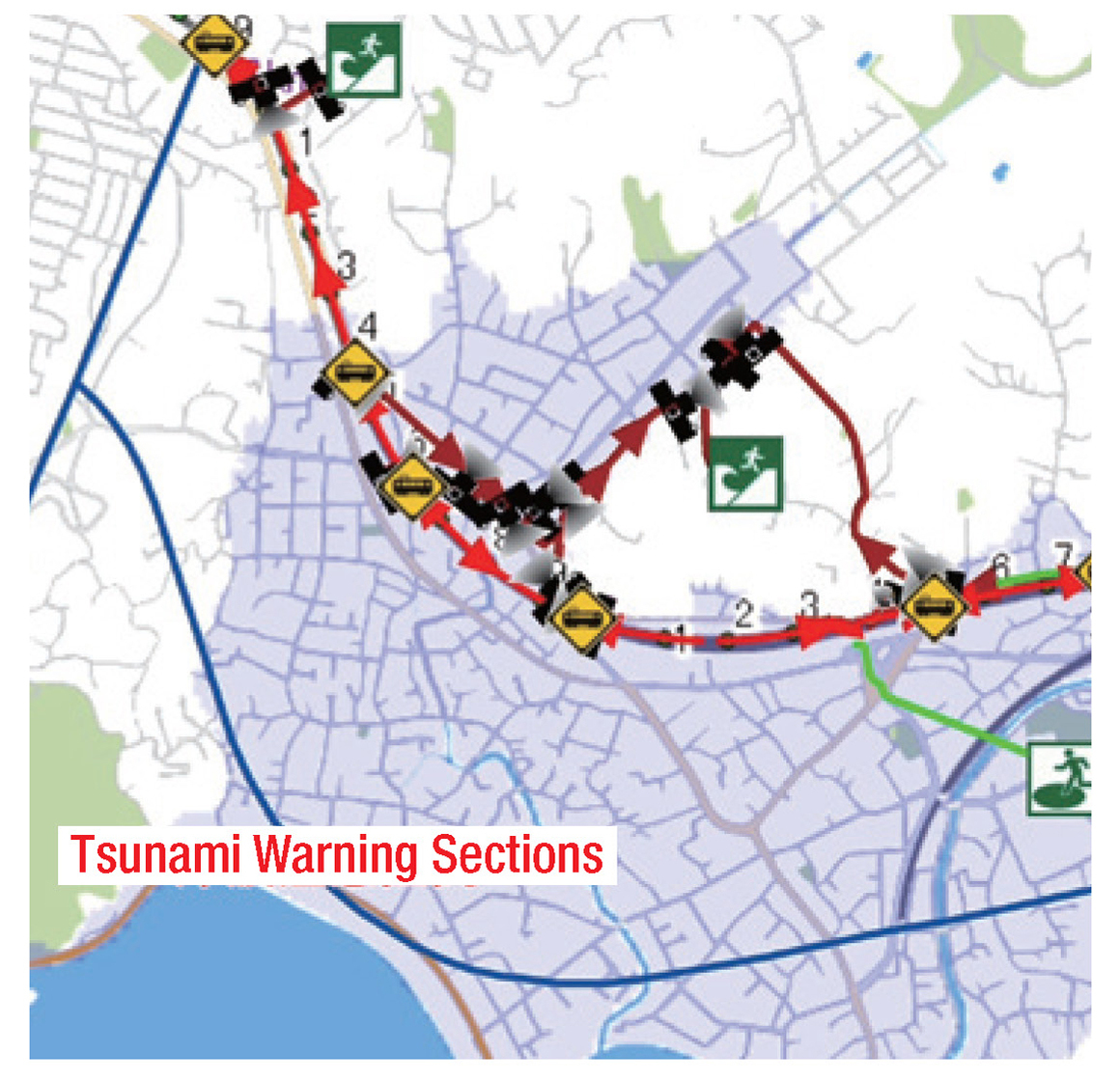
Learning from the tsunami evacuation at the time of the Great East Japan Earthquake, we have developed and introduced tools to help crew on trains in operation to guide passenger evacuations in unfamiliar locations.