Our Measures Against Earthquakes
Seismic Reinforcement Measures
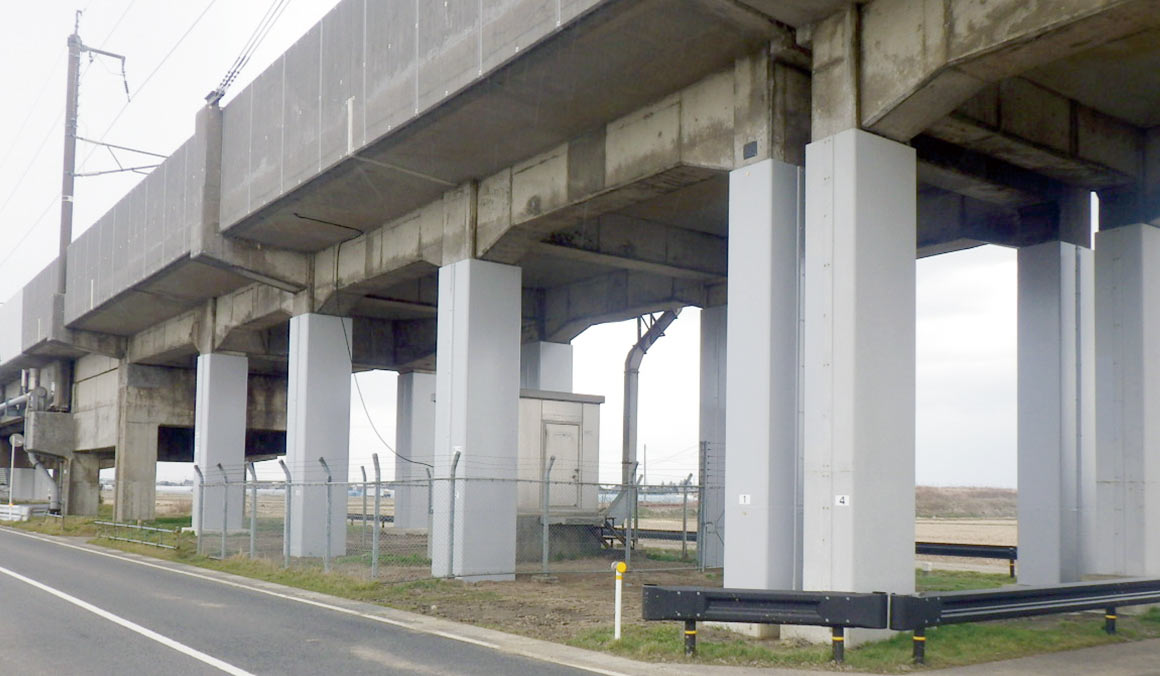
We are conducting seismic reinforcement to prepare for large-scale earthquakes such as an earthquake striking the Tokyo metropolitan area directly, which is expected to happen in the near future.
Evolution in Seismic Reinforcement Measures
| January 1995 |
Great Hanshin-Awaji Earthquake Implementation of emergency seismic reinforcement measures |
|---|---|
| May 2003 |
Sanriku-Minami Earthquake Expansion beyond the area of the emergency seismic reinforcement measures |
| October 2004 |
The Mid Niigata Prefecture Earthquake in 2004 |
| March 2011 |
Great East Japan Earthquake Commencement of seismic reinforcement measures in preparation for an earthquake striking directly below Tokyo Expansion of countermeasure areas and addition of further measures based on the latest knowledge |
| March 2022 |
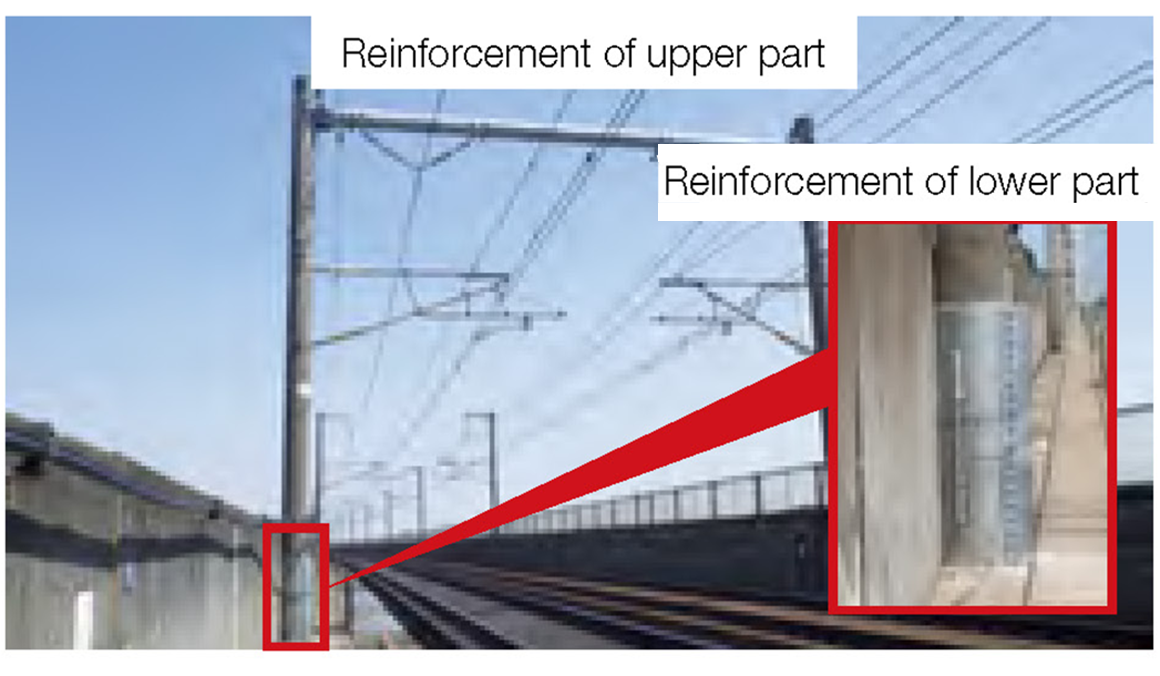
Earthquake off the coast of Fukushima Review of reinforcement plans for “ramen” rigid frame viaduct abutments, utility poles, etc. |
Promoting Seismic Reinforcement of Platform Canopies
We have been working on seismic reinforcement of platform canopies since FY2018.3, but many restrictions were placed on the construction work as welding was traditionally required. We have developed two new construction methods that eliminate the need for welding, and this has significantly improved workability. For example, construction time at some stations has been reduced by approximately 80%.
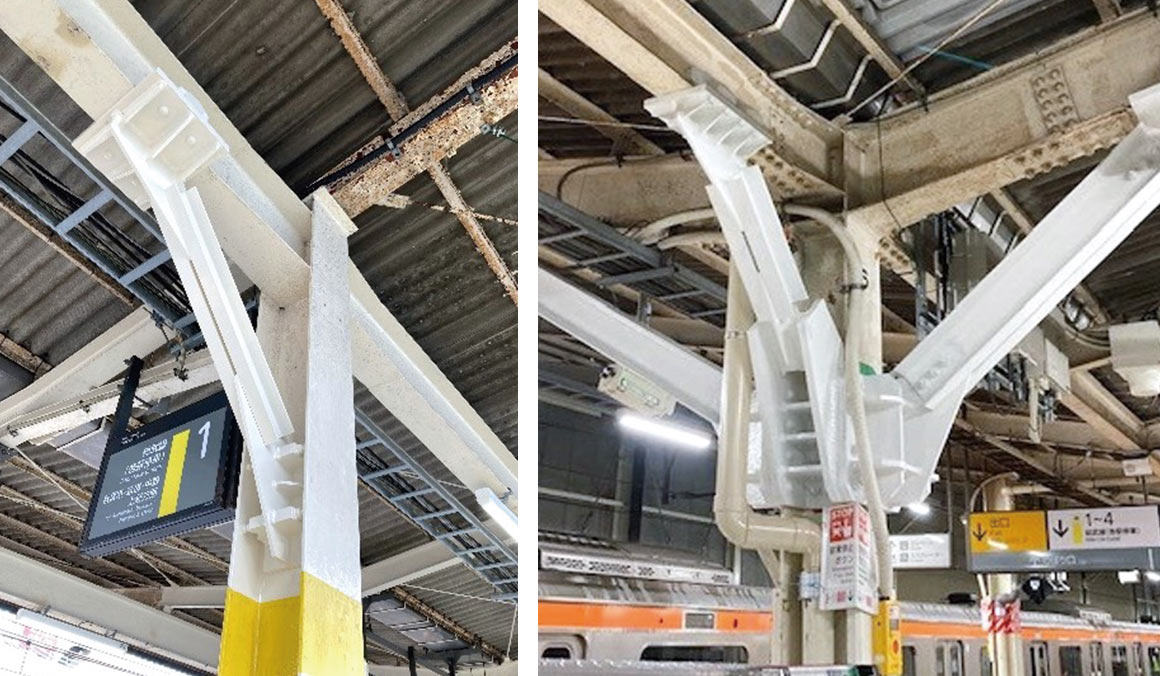
Smart Both Axis Method (Photograph on right)
Measures for Emergency Stopping of Trains
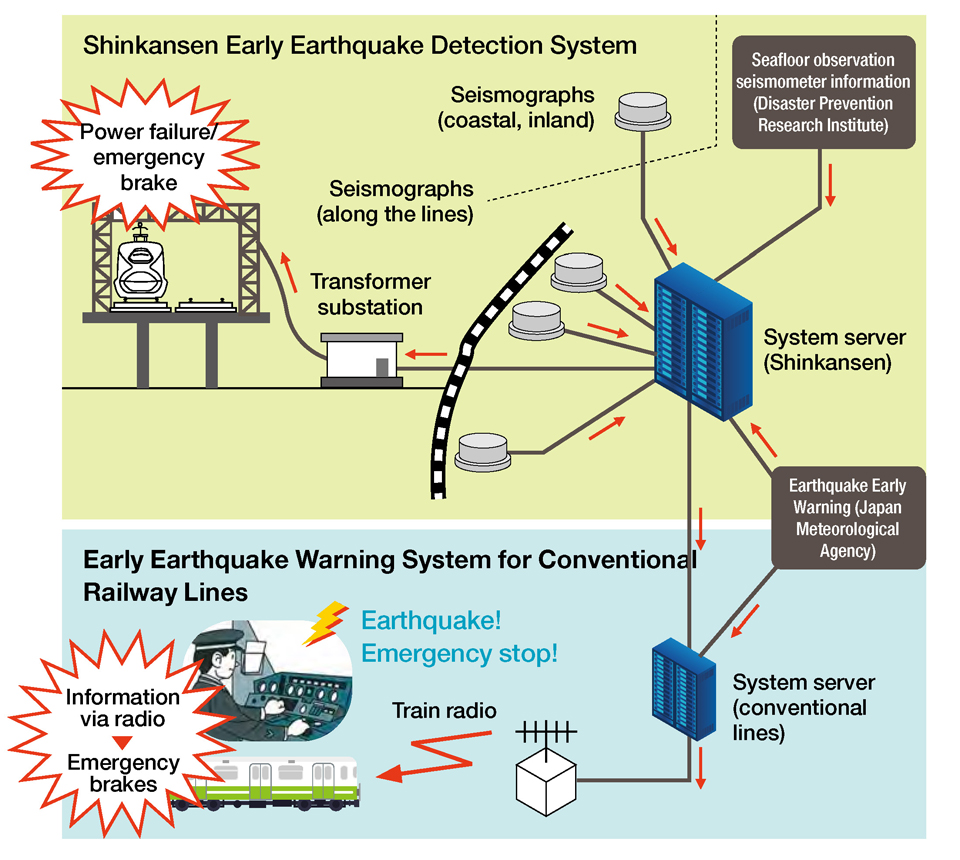
We are constructing systems to ensure that high-speed trains can stop as quickly as possible in the event of an earthquake. Since the opening of the Shinkansen line, these systems have undergone various improvements, including the addition of more seismometers, improved methods for estimating earthquake information, and the use of external earthquake information such as the Japan Meteorological Agency’s Earthquake Early Warning System and the ocean-floor seismometers of the National Research Institute for Earth Science and Disaster Resilience. In 2023, we improved the process for estimating earthquake magnitude after earthquake detection. Verification of 13 earthquakes over the past three years has shown that the revised estimation method reduces the time required to stop power transmission after detection of the first weak tremors from an average of 3.9 seconds to an average of 1.3 seconds, a reduction of 2.6 seconds. All Shinkansen seismometers have been improved, and we have been using them since March 2024.
Using the seismic information provided by this Shinkansen system, we have also installed an early earthquake warning system on conventional lines to provide emergency stop notification if large-scale earthquakes are observed.
 You can pinch out to zoom in.
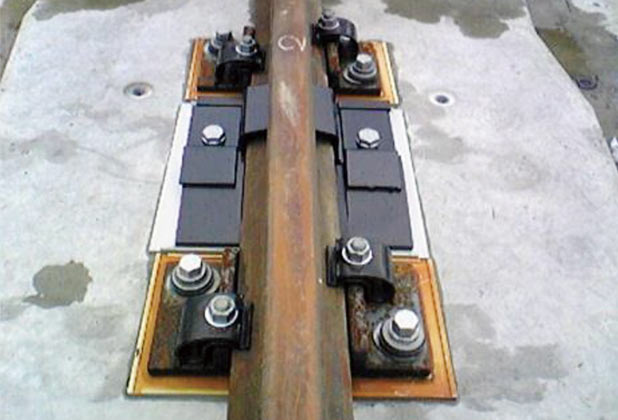
Measures to Prevent Derailment on Shinkansen
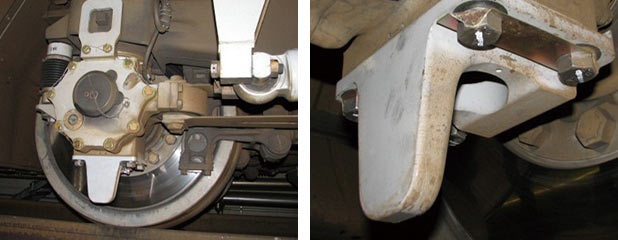
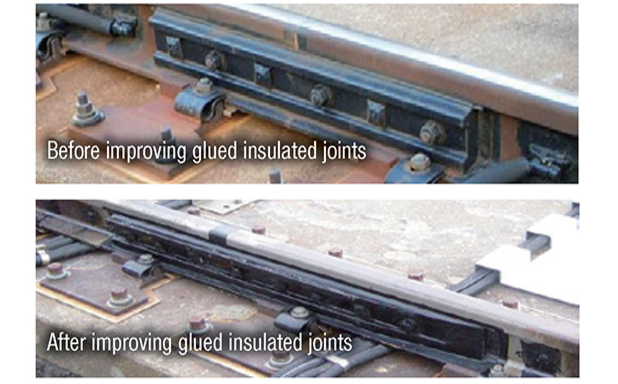
We have measures in place to prevent Shinkansen trains from deviating too far from the track even in the event of derailment due to an earthquake.
General Emergency Drills
Every year, we conduct general emergency drills, assuming an earthquake has struck, most notably during disaster prevention week, which includes September 1st. In our annual training, we conduct more practical training, focusing on rescue and first aid measures based on a scenario where an earthquake has directly struck the Tokyo metropolitan area, causing simultaneous derailments and other incidents on various lines in the metropolitan area and resulting in injuries to many customers. In the FY2026.3 training, we conducted informationgathering training utilizing DX, as well as trainings conducted in collaboration and coordination with Group companies such as station building operators.
In addition, at stations at risk of flooding, we are conducting drills simulating flooding at stations that are prone to such risk.


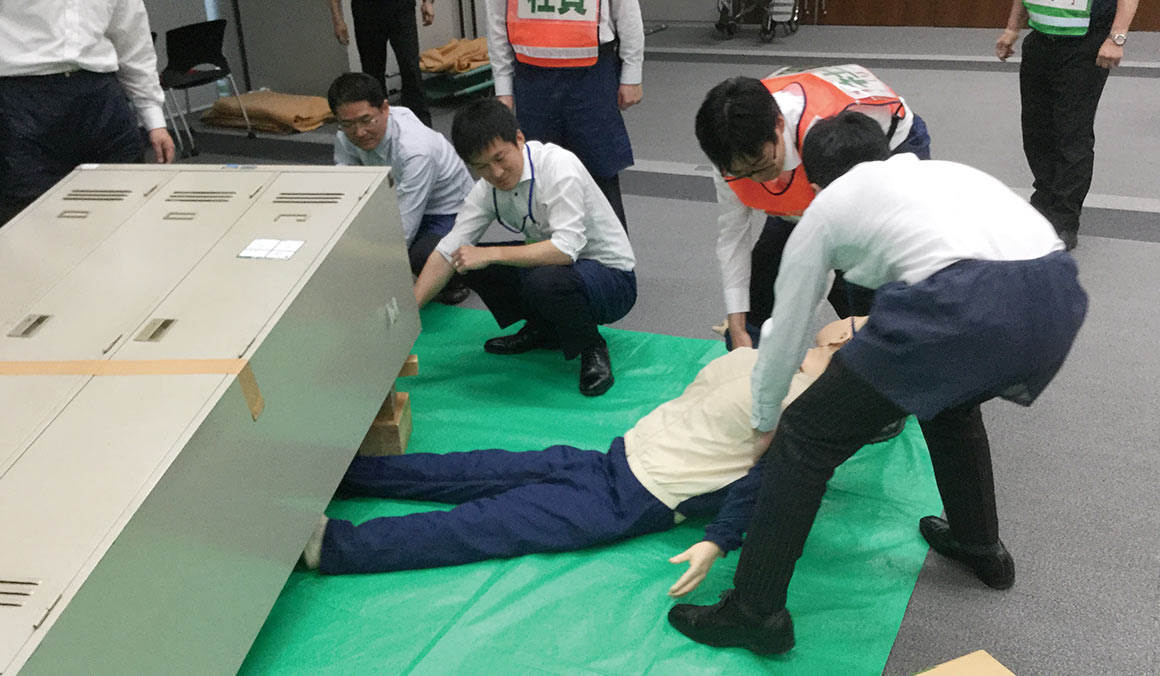
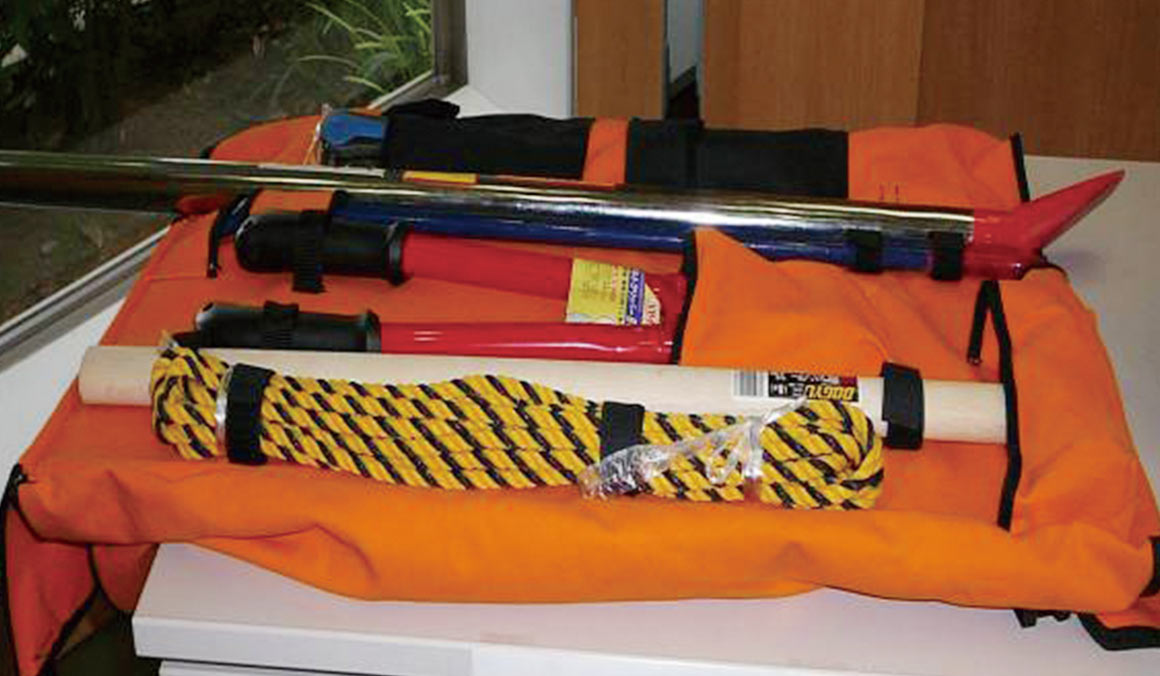
Implementation of Rescue and First Aid Drills and Preparation of Kits
In the wake of the Great East Japan Earthquake, JR East conducts its own rescue and first aid training courses with the aim of ensuring passenger safety and teaching our employees first aid to administer as first responders in the event of a major earthquake. We also prepare kits to meet various rescue needs.